

Ceramic permeable bricks and Hoensoey Cells can work together as a drainage management train. The full system still needs a site-specific design. The surface admits runoff. Bedding and aggregate convey it. Storage temporarily holds it. An approved infiltration, underdrain or controlled-outlet strategy manages what happens next. For the current product range and commercial specifications, use the HOENSOEY Cells owner page.
In the face of rapid urbanization, effective stormwater management has become crucial for sustaining urban ecological balance and enhancing the living environment.
The innovative combination of Hoensoey Cells and ceramic permeable bricks introduces a groundbreaking solution for urban stormwater management and aesthetic pavement, offering a novel approach to green development and beautification of urban spaces.
On this page
Hoensoey Cells: Revolutionary Technology for Stormwater Management
Hoensoey Cells, characterized by their unique hexagonal design, not only boast high strength and ample capacity but also facilitate rapid installation and flexible layout through modular connectivity.
Their proficiency in collecting and infiltrating rainwater effectively reduces urban surface water accumulation, alleviating the burden on traditional urban drainage systems.
More importantly, Hoensoey Cells contribute to groundwater recharge, positively impacting the urban ecological environment by promoting the natural water cycle.
The hexagonal description above refers to the internal module structure. For project planning and procurement, present the installed footprint, storage role, connections, access and site-specific performance. Do not make the internal cell shape the commercial identity. Infiltration and groundwater recharge are site decisions. A lined or underdrained configuration may be required where soil, groundwater, contamination, nearby structures or local rules make infiltration unsuitable.

Ceramic Permeable Bricks: The Ideal Choice for Beautifying the City
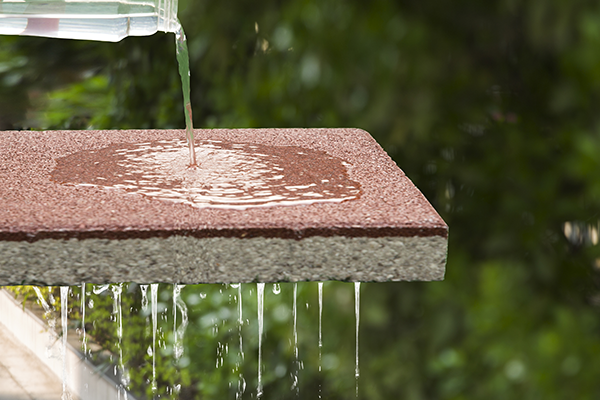
Chosen for their excellent water permeability and natural beauty, ceramic permeable bricks have become the preferred material for urban pavement.
Unlike traditional impermeable materials, these bricks allow rainwater to penetrate directly into the ground, reducing runoff and mitigating the urban heat island effect.
Their diverse colors and designs not only serve as an effective tool for water management but also significantly enhance urban aesthetics and residents’ well-being.
The surface layer is only the first step. Its useful flow rate depends on the selected product, jointing, bedding, aggregate, sediment loading, workmanship and maintenance. Water passing through the surface may enter a storage layer. It may infiltrate suitable ground. Alternatively, it may leave through an underdrain or controlled outlet. Calculate and detail the chosen configuration. The surface material alone does not establish whole-site runoff, temperature or amenity performance.
Combined Application: Showcasing Dual Benefits
The synergy of Hoensoey Cells with ceramic permeable bricks magnifies the advantages in both stormwater management and urban beautification.
This combination is highly effective in diverse settings, such as synthetic lawns, park pathways, and residential squares, addressing waterlogging issues while adding green spaces and beautiful landscapes to the city.
- Stormwater Management: Ceramic permeable bricks rapidly direct rainwater into the ground, where Hoensoey Cells below store excess water, gradually releasing it post-rainfall. This prevents water accumulation and mud, ensuring dry surfaces.
- Environmental Sustainability: This innovative combination promotes the natural cycle of rainwater and groundwater replenishment while reducing the strain on urban drainage systems, contributing to sustainable urban development.
- Urban Aesthetics: Thoughtfully designed ceramic permeable brick pavements are not only visually appealing but also harmoniously blend with the surrounding environment, improving the overall visual appeal and quality of life for city dwellers.
How the Management Train Works
- Receive runoff at the surface. Confirm contributing area, surface gradients, inlets and the permeable-brick infiltration rate after realistic sediment loading.
- Convey and pretreat. Detail bedding, aggregate and any pretreatment needed to limit sediment or pollutant transfer into the storage layer.
- Store and control. Calculate inflow, active storage, operating levels, outlet or underdrain, drawdown time, surcharge and a safe exceedance route.
- Inspect and maintain. Provide access, cleaning methods, sediment management, owner responsibilities and performance checks for the surface and subsurface components.

Designing with Ceramic Permeable Bricks and Hoensoey Cells
- Survey catchment areas, levels, existing drainage, utilities, structures and safe overflow routes.
- Test subgrade and seasonal groundwater; screen contaminated land and sensitive groundwater receptors before proposing infiltration.
- Define the design rainfall, discharge limit, active storage, infiltration where permitted, underdrain/outlet controls and drawdown requirement.
- Check surface, bedding, sub-base, wrapping or liner, cell configuration and foundations for construction and design loads.
- Coordinate water-quality treatment, sediment control and local approvals; storage is not automatically treatment.
- Document inspection, surface cleaning, access, sediment removal, repair and replacement responsibilities.
The U.S. EPA’s permeable-pavement overview describes storage in underlying layers. Depending on the design, water may then infiltrate or leave through an underdrain. The FHWA permeable-pavement technical brief similarly distinguishes full-, partial- and low-infiltration configurations.
England’s national SuDS standards illustrate early planning as a management train. They cover ground and groundwater investigations, calculations, water-quality controls, operation and maintenance. Those requirements are jurisdiction-specific. They do not replace the rules for another project. None of these sources certifies HOENSOEY or this combination.
Conclusion
The integration of Hoensoey Cells with ceramic permeable bricks offers an efficient, beautiful, and sustainable solution for urban stormwater management.
This represents not only a new perspective on rainwater resource management in modern urban construction but also the practice of pursuing beautiful, green, and harmonious urban development.
Looking ahead, this innovative combination is expected to be widely adopted in more cities, contributing to sustainable development and the well-being of urban residents.
The conclusion above remains the original educational position. For ceramic permeable bricks and Hoensoey Cells, a procurement or design decision should verify the surface product and subsurface configuration. It should also verify the evidence for each benefit, the local approval pathway and a funded maintenance plan. Keep current commercial specifications on the HOENSOEY Cells owner page rather than duplicating them here.